
Tag: Gobind Fertility & IVF centre

  • Choosing the Right IVF Centre: A Comprehensive Guide for Hopeful Parents

    Choosing the Right IVF Centre: A Comprehensive Guide for Hopeful Parents

    Choosing the Right IVF Centre

    Embarking on the journey of in vitro fertilization (IVF) is a deeply personal and emotional decision. For couples struggling with infertility, selecting the right IVF centre can make all the difference in their quest to become parents. This guide will walk you through the crucial factors to consider when choosing the right IVF centre, empowering you to make an informed decision that aligns with your unique needs and aspirations.

    When evaluating IVF centres, success rates are often the first metric that catches our attention. However, it’s essential to look beyond the surface-level percentages and understand what these numbers truly mean.

    • Age-specific success rates: Look for clinics that provide success rates broken down by age groups, as fertility decreases with age.
    • Live birth rates: Focus on live birth rates rather than just pregnancy rates, as this is the ultimate goal of IVF treatment.
    • Comparison to national averages: See how the clinic’s success rates compare to national averages for a broader perspective.

    Remember, higher success rates don’t always indicate a better clinic. Some centres may achieve high rates by being selective about the patients they accept. It’s crucial to discuss how your specific case fits into their statistics.

    IVF treatment can be a significant financial investment. Understanding the costs involved and your insurance coverage options is vital for making an informed decision.

    • Transparent pricing: Look for clinics that provide clear, itemized cost breakdowns for all procedures and medications.
    • Insurance coverage: Check if the clinic works with your insurance provider and what specific treatments are covered.
    • Financing options: Inquire about payment plans or grants that may be available to help manage costs.

    Pro tip: Carefully review the terms and conditions before committing.

    The field of reproductive medicine is constantly evolving. Clinics that invest in the latest technologies often provide better outcomes and more personalized treatment plans. It is one of the major factors to consider while choosing the right IVF centre.

    Key technological advancements to look for include:

    • Preimplantation Genetic Testing (PGT): Allows for screening of embryos for genetic abnormalities.
    • Time-lapse embryo monitoring: Provides continuous observation of embryo development without disturbing the culture environment.
    • Advanced cryopreservation techniques: Ensures better survival rates for frozen eggs and embryos.

    Don’t hesitate to ask about the clinic’s specific technologies and how they might benefit your treatment.

    The expertise of the medical team can significantly impact your IVF journey. When evaluating clinics, Inquire about the team’s collective experience in reproductive medicine. Ask about their involvement in ongoing research or professional development activities.

    Remember, a good doctor-patient relationship is crucial—schedule consultations at Gobind Fertility & IVF Centre to get a feel for the clinic’s communication style and approach to patient care.

  • Egg Freezing: The freedom to become a mother is now in your hands
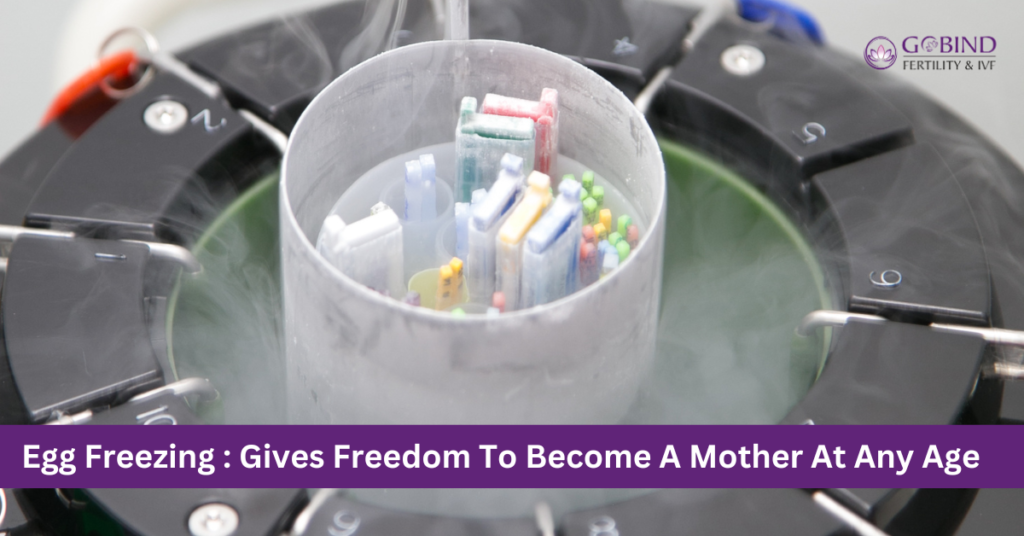
    Egg Freezing: The freedom to become a mother is now in your hands

    Egg Freezing

    Nowadays many women are choosing the option of egg freezing to protect their fertility. Be it career, health problems, or personal choice, everyone needs to have information on this topic. Before egg freezing, it is important to know the complete process.

    In this article, we will answer all the questions related to egg freezing that you want to know so that you can make the right decision.

    For those women who:

    Career planning: Many women delay pregnancy due to careers.

    Health conditions: Some medical treatments (such as chemotherapy) can affect fertility.

    Personal choice: Some women wait until they find the right partner.

    Aging: Fertility decreases with age, in such a situation, egg freezing preserves your young and healthy eggs.

    First of all, it is important to know the process before doing egg freezing. The process at Gobind Fertility & IVF Centre is as follows:

    1. Ovarian Stimulation: You are given hormonal injections to stimulate your ovaries to produce more eggs.

    2. Egg Retrieval: When the eggs mature, they are removed through a small surgical procedure.

    3. Freezing: The removed eggs are frozen using the vitrification technique so that they can be used later.

    The entire process takes about 10-14 days.

    The entire process takes about 10-14 days. It includes ovarian stimulation, egg retrieval and freezing.

    Not every woman is suitable for egg freezing. Some factors like age, ovarian reserve and overall health play an important role in this. Ladies can get the best results at the age of 20-30 years. If your ovarian reserve is high, then your chances of success are also high.

    For women who have diseases like cancer and who may lose fertility due to treatments, egg freezing can be a good option.

    Yes! Egg freezing does not affect the natural fertility of any woman. Women can get pregnant naturally in the future.

    In simple words, the best age for egg freezing is considered to be between 25 to 35 years. At this age, the quality and quantity of eggs is the best. After the age of 35, the quality and number of eggs start decreasing.

    Age matters in Egg Freezing because

    1. As age increases, both the quality and number of eggs start decreasing.

    2. Success Rate: If a woman freezes eggs between the ages of 30-35, then the chances of becoming a mother in the future are higher.

    3. Genetic Risk: After the age of 35, the risk of genetic problems in eggs increases.

    So if you think about freezing eggs, the sooner you do it, the better it will be. And to get your eggs frozen, take the help of Govind Fertility Center.

    Yes, some women freeze their eggs even after 40, but it comes with some problems:

    Lower success rate: After 40, the quality of eggs is not that good, so the chances of success also decrease.

    Higher cost: At this age, multiple cycles may be required to freeze enough eggs.

    Health risk: With age, pregnancy-related risks, such as miscarriage or complications, increase.

    If you are thinking of freezing eggs after 40, then once discuss it thoroughly with our fertility expert Dr. Manju Khurana.

    This depends on your age

    Under the age of 35: You are advised to freeze 10-15 eggs.

    Above 35: You may need to freeze more eggs (15-20 or even more) because the quality of eggs decreases with age. Freezing more eggs increases the chances of future pregnancy.

    Every medical procedure carries some risk, and egg freezing is no different. But it is safe for most women. Some of the risks are:

    Ovarian hyperstimulation syndrome (OHSS): This is a rare but serious condition caused by over-stimulation of the ovaries.

    Bleeding or Infection: Although rare, any surgery carries some risk.

    Most women experience mild pain, swelling, or cramps after egg retrieval.

    Absolutely. Because of advanced freezing techniques like vitrification, there is no difference between frozen eggs and fresh eggs in achieving IVF success rates.

    Eggs can be stored for a long time, but it is important to know for how many years eggs can be used. Research shows that eggs can be stored well for 10 years or even more. At Gobind Fertility & IVF Centre, you will also get long-term storage options as per your fertility plan.

    Consultation and Testing: Hormone testing and ultrasound are done to determine fertility conditions.

    Medication: Hormonal medications are given for ovarian stimulation.

    Egg Retrieval and Freezing: The process of extracting eggs and freezing them.

    Apart from this, storage fees is also charged every year for storing the eggs.

    Success rates depend on the clinic, your age and your health. It is very important to know what your individual success chances are according to your age and ovarian reserve.

    The decision of egg freezing is a personal choice. What is your age and fertility health, when do you want to have a child, if you are undergoing medical treatments that can affect your fertility, then consult Fertility Specialist Dr Manju Khurana, from whom you can get personalized advice and you can make the right decision.

    Egg freezing is a great option for women who want to protect their fertility in the future. Age is the most important factor in the case of egg freezing. If you are thinking of freezing eggs, it is better to consider it before the age of 35. The team of Gobind Fertility and IVF will give you complete information and correct guidance about egg freezing so that you can protect your fertility in a better way.

    Also Read : Frozen Embryo Transfer Benefits

  • A Comprehensive Guide on When to Visit a Fertility Specialist
    A Comprehensive Guide on When to Visit a Fertility Specialist

    When to Visit a Fertility Specialist | Gobind Fertility & IVF Center in Hisar

    Navigating the journey to parenthood can be a deeply personal and sometimes challenging experience. The path to conception is straightforward for many couples, but for others, it may require professional assistance. Knowing when to visit a fertility specialist is crucial for optimizing your chances of achieving a successful pregnancy. This article guides on the right time to consult a fertility specialist and what to expect from the process.

    Before delving into when to visit a fertility specialist, it’s important to understand what is considered normal when trying to conceive.

    • General Timeline: For most couples, the average time to conceive is within 6 to 12 months of regular, unprotected intercourse. This timeframe may vary based on age and health factors.
    • Age Considerations: Fertility naturally declines with age, especially for women. Women over 35 are advised to seek professional advice after 6 months of trying, while women under 35 can generally wait up to 12 months before consulting a specialist.

    Several indicators suggest it may be time to consult a fertility specialist.

    Here’s a breakdown of key signs:

    • For Women: If you’re under 35 and haven’t conceived after a year of regular, unprotected sex, it’s a good idea to seek help. For those over 35, consider seeing a specialist after 6 months.
    • For Men: If there are concerns about sperm quality, such as low libido or issues with ejaculation, a fertility specialist can provide an evaluation.
    • Women with irregular or absent menstrual cycles may have underlying conditions such as polycystic ovary syndrome (PCOS) or thyroid issues, which can affect fertility. A fertility specialist can help diagnose and treat these conditions.
    • Experiencing recurrent miscarriages (typically defined as three or more) warrants a consultation with a fertility specialist. They can perform tests to identify potential causes and recommend treatments to improve the chances of a successful pregnancy.
    • Conditions like endometriosis, uterine fibroids, or chronic illnesses such as diabetes can impact fertility. Consulting a specialist can help manage these conditions in the context of conception.
    • Women over 40 or men with concerns about age-related fertility decline should seek early consultation with a specialist. Fertility treatments and interventions may be more effective with early planning.
    • If you or your partner have known genetic conditions or hormonal imbalances, a fertility specialist can offer testing and treatment options to address these issues.
    • If you’ve undergone previous unsuccessful fertility treatments, it might be time to consult a specialist for a second opinion or to explore advanced treatment options.

    When you decide to see a fertility specialist, here’s what you can expect:

    • The first visit typically involves a thorough review of your medical history, lifestyle factors, and fertility concerns. Both partners may be asked to provide information to identify any potential issues.
    • The specialist may recommend a series of tests to evaluate fertility. This might include blood tests, hormone level assessments, ultrasound scans, semen analysis for men, and possibly more specialized tests depending on individual circumstances.
    • Based on the results, the specialist will discuss possible treatment options. These may range from lifestyle changes and medication to more advanced interventions such as in vitro fertilization (IVF) or intrauterine insemination (IUI).
    • A fertility specialist will work with you to create a personalized treatment plan that aligns with your goals, health, and circumstances. They will also provide guidance on the next steps and what to expect throughout the process.
    • Navigating fertility issues can be emotionally challenging. Many fertility clinics offer counselling and support services to help individuals and couples cope with the stress and emotional aspects of the journey.

    Deciding to visit a fertility specialist is a significant step, and knowing when to seek help can make a difference in your journey to parenthood. If you find yourself facing prolonged difficulties in conceiving, experiencing reproductive health issues, or have concerns about your fertility, Dr. Manju Khurana (Senior IVF Specialist ) at Gobind Fertility & IVF Center in Hisar can provide valuable insights and treatment options.

    Remember, seeking professional help early can often lead to better outcomes and provide you with the support and resources needed to achieve your fertility goals.

    ..