



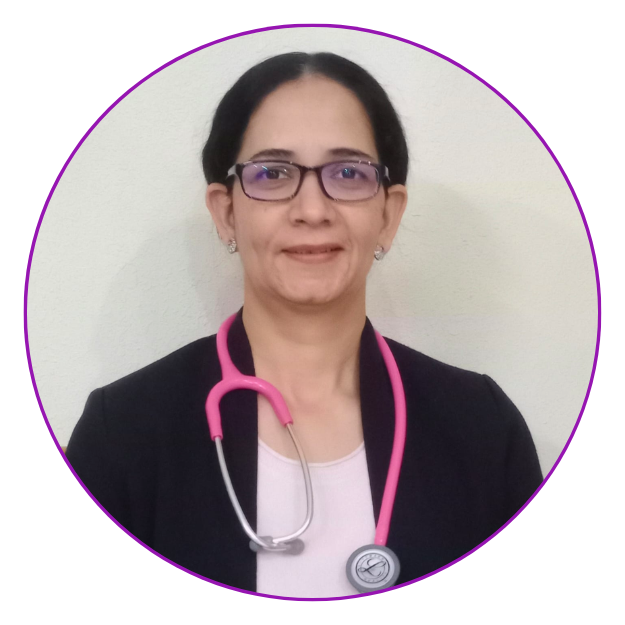
Dr. Preeti Moond
MBBS, DGO, DNB, FRM
Consultant - Gynae & Obstetrics, Laparoscopic Surgeon, Infertility Specialist
General Info

Dr. Preeti Moond is a highly skilled and experienced gynecologist and fertility specialist with a strong background in obstetrics, reproductive medicine, and infertility treatment. With an MBBS degree from Assam Medical College and advanced qualifications including DGO, DNB, and a Fellowship in Reproductive Medicine, she has built a comprehensive expertise in women’s healthcare.
She has worked at reputed institutions such as Hindu Rao Hospital and Saket City Hospital in New Delhi, gaining valuable experience in managing a wide range of gynecological and obstetric cases. Currently serving as a Fertility Consultant, Dr. Moond specializes in advanced infertility treatments, including procedures like IVF-related techniques, hysteroscopy, and laparoscopy.
Dr. Moond is known for her proficiency in handling high-risk pregnancies, prenatal care, labor management, and cesarean deliveries. Her special interests include managing poor ovarian responders, male infertility, and cases involving thin endometrium.
Beyond her technical expertise, she is recognized for her compassionate and patient-centered approach, ensuring that individuals and couples receive personalized care and emotional support throughout their treatment journey.
Our Director and Specialist
Patient's Testimonials
Frequently Asked Question by Patients
Infertility is an inability to conceive a child after one year of trying to become pregnant through regular, unprotected sexual intercourse. About 10-15% of couples worldwide are affected from infertility.
Step 1. The female partner is administered an ovulation induction protocol to maximize the number of mature eggs for that cycle.
Step 2. Once these eggs are mature enough, they are retrieved. A sperm sample is obtained from the male partner, and the eggs are artificially fertilized. This process lasts about half a day.
Step 3. Three to five days later, the resultant embryos are transferred to the uterus.
IVF is usually offered as a fertility solution who are not able to conceive naturally and have problems like fallopian tube damage, premature ovarian failure, extensive endometriosis, impaired sperm production or unexplained infertility. It is also recommended to women who do not have a functional uterus.
The cost of IVF treatment may vary between ₹1.25 Lakhs to ₹2 Lakhs Approx. and depends on following factors.
1. Reasons for male & female infertility
2. Treatment method/technology suggested (Including additional treatments & services)
3. Any other pre-existing medical condition
No! The process is not painful, but it may cause mild discomfort. We at Gobind Fertility IVF use mild general anesthesia administered via IV route that relieves discomfort.
In IUI we commonly advise a rest of 15-30 mins after the procedure in the hospital and after that the patient can do their normal working. In IVF Embryo transfer, the patient is advised a rest of 3-4 hours in the hospital after which they can go home but not do heavy work for 2-3 days.
There are many potential causes of infertility in both men and women, including problems with ovulation, blocked fallopian tubes, endometriosis, low sperm count or motility, genetic factors, age, and others.
No, infertility is not always a woman's problem. The male partner plays an equal role in determining the fertility potential of a couple. Male infertility may be caused by tubal blockages, injuries, low sperm count, poor sperm motility or abnormal sperm morphology. If you've been struggling with conception, meet a fertility specialist on Gobind Fertility to find your path to pregnancy.
IVF may be recommended for couples who have been unable to conceive after 12 months of trying (6 months if the woman is over 35), or for those with certain fertility issues like fallopian tube blockage or severe male factor infertility.
Both are forms of in vitro fertilization, differing in only the method of fertilization in the embryology lab. In IVF, the sperms and the egg are allowed to fertilize in a small petri dish and this method is very similar to the natural form of fertilization. IVF is deployed when sperm parameters are normal. ICSI, is the form of Fertilization, mainly for Male Factor fertility, where each egg is injected with the help of a fine needle with the sperm. Indicated when the sperms parameters are deranged in count, motility, morphology.
The average length of a single IVF cycle is about four to six weeks.
There are many parameters which decide this, like the age of the female partner, clinical profile of the patient, previous response to IVF cycle, Financial implications. In most of the cases, IVF can be attempted 3-4 times, if all the parameters are in range.